

Quick answer Fine wine can diversify a collection, but it carries risk: prices rise and fall, and storage, provenance and costs matter. Past index performance does not guarantee future returns.
Fine wine attracts collectors who want both something to enjoy and something that may hold value. This guide explains how the market is measured, what history shows, and what to check before buying. It is general information, not financial advice.
Key takeaways
- The Liv-ex 1000 is described by Liv-ex as the broadest measure of the fine wine market.
- Fine wine prices fall as well as rise: the index dropped 13.3% between 2011 and 2014.
- Provenance, storage and authenticity directly affect a bottle’s value.
How is the fine wine market measured?
Liv-ex, the fine wine exchange, publishes indices that track prices. Its Liv-ex 1000 is described as the broadest measure of the fine wine market, with sub-indices for regions such as Bordeaux, Burgundy, Champagne and Italy.
Does fine wine always go up in value?
No. In Liv-ex’s February 2017 market report, the Liv-ex 1000 closed at 303.15, a new all-time high, after previous peak of 279.69 in July 2011 during a China-led bull market. Between that peak and August 2014 the index fell 13.3% to a low of 242.6. This is historical data, shown only to illustrate that the market moves in cycles.
Do some regions perform differently?
Yes. In that same 2017 report, the Burgundy 150 was up 25.9% over one year and the Bordeaux Legends 50 up 22.8%, while the Italy 100 slipped 0.3% in the month. Second wines outperformed First Growths over the year (31.3% versus 25%). Performance varies by period, so recent data should always be checked.
What should you check before buying fine wine?
- Provenance: who owned and stored the bottle, and for how long.
- Storage: conditions affect condition and value — see how to store wine at home.
- Authenticity and condition: labels, fill level, capsule and cork.
- Costs and liquidity: storage, insurance, fees and the time it may take to sell.
- Appellation and vintage: learn the hierarchy, for example the 1855 Bordeaux Classification or the Burgundy grand cru system.
You can explore our investment selection or browse all wines.
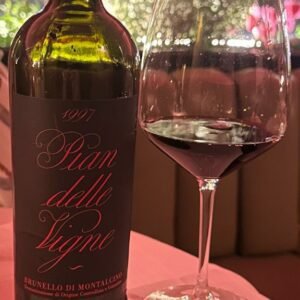
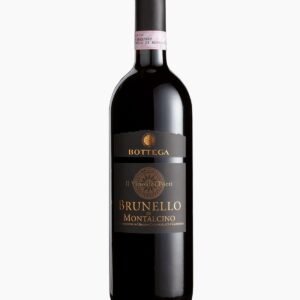
Collectible bottles from our investment selection
Frequently asked questions
Is fine wine a good investment?
It can diversify a collection but is not risk-free: prices change over time and costs such as storage and insurance apply. Past performance does not guarantee future returns.
What is the Liv-ex 1000?
The Liv-ex 1000 is described by Liv-ex as the broadest measure of the fine wine market.
Can fine wine lose value?
Yes. In Liv-ex’s data the index fell 13.3% from its July 2011 peak to a low of 242.6 in August 2014.
What matters most when buying a collectible bottle?
Provenance, storage history, authenticity and condition, plus the cost of storing and selling it.
Is this financial advice?
No. This article is general information; for personal decisions consult a qualified financial adviser.
Sources
- Liv-ex — Fine wine market report, February 2017 — Liv-ex 1000 and sub-index figures. Data is historical (2017); check Liv-ex for current figures.
Last reviewed: October 2026. Figures cited are from a 2017 report and are historical.
Explore our wine selection
Rare and collectible bottles, filterable by country, region, producer and vintage.